Communication & Behaviour Change Skills for Clinical Practice – Feb 2027
🧠 Course Overview
Format: Online, interactive (Zoom)
Duration: THREE SESSIONS × 4 HOURS = 12 hours total
Target Audience: Soft Tissue Therapists, Sports Therapists, Massage Therapists, Physiotherapists, Podiatrists, Chiropractors, Osteopaths, Dieticians / Nutritionists, Coaches / Personal Trainers
Next Course Dates:
• Session 1 – Saturday 06 February 1pm to 5pm
• Session 2 – Saturday 13 February 1pm to 5pm
• Session 3 – Saturday 20 February 1pm to 5pm
🗨️ Why This Course Matters
Effective communication is at the heart of quality healthcare. Whether you’re supporting a client or patient through health related behaviour & lifestyle changes, or collaborating with colleagues, your ability to communicate clearly, empathetically, and persuasively can dramatically influence outcomes. Rather than blaming clients for ‘not doing what we told them’, we now understand that achieving a behaviour or lifestyle change, even if temporary, is often not as easy as it sounds, and we the practitioner can often be the catalyst for either success or failure.
‘Communication & Behaviour Change Skills for Clinical Practice‘ is designed to equip healthcare professionals with the skills and strategies needed to navigate the complex human dynamics of clinical practice. Delivered online by Matt Phillips, Communication Specialist and host of the STA Clinician Podcast, the course will guide you through a selection of approaches that illustrate how small, simple tweaks to our normal way of communicating can help clients & patients embrace positive, meaningful behaviour change, and see opportunity in our professional advice rather than hinderance & challenge. Blending evidence-based communication techniques with practical behaviour change models, the course will help you to:
✨ Build stronger relationships with patients
✨ Encourage adherence to treatment plans
✨ Handle challenging conversations with confidence
✨ Promote long-term health behaviour change
Over the three sessions, you will explore real-world scenarios, practice key techniques, and reflect on your own communication style. By the end of the course, you will have a toolkit of approaches to enhance your clinical effectiveness and improve patient outcomes.
Session Breakdown
Session 1: Foundations of Clinical Communication
Duration: 4 hours
Topics
• Learning from Classical Greek Philosophy
• Descartes and the Cartesian Model of Pain
• The birth of Psychology: Wilhelm Wundt and William James
• Psychoanalysis & Behaviourism
• Maslow, Rogers and Humanistic Psychology
• Motivational Interviewing
Session 2: Behaviour Change Models & Techniques
Duration: 4 hours
Topics
• Transtheoretical Model
• Motivational Interviewing
• Identifying barriers to change
• Engage, Focus, Envoke, Plan
• Open-ended questions
• Affirmations
• Reflective listening
• Summaries
Activities
• Case study analysis
• Breakout Rooms & Role Play
• Reflection & Feedback
Session 3: Advanced Communication & Challenging Conversations
Duration: 4 hours
Topics
• Handling resistance & ambivalence
• Delivering difficult news with compassion
• De-escalation & conflict resolution
• Sustaining behaviour change over time
Activities
• Simulation exercises with feedback
• Peer coaching sessions
• Structured reflection & action planning
📘 Supporting Materials
- Zoom slides will be shared after each session (PDF)
- Behaviour change model cheat sheets
- Recommended reading list
Minimal Requirements Of Qualification:
All health care practitioners with Level 3 qualification or above are welcome to join the course, but attendees must be aware of their own personal scope of practice, as directed by their personal level of qualification.
About The Presenter
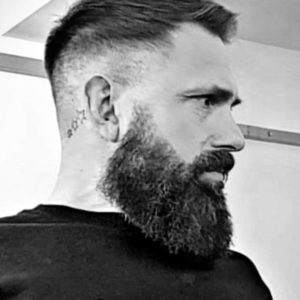 Matt Phillips is an educator, podcaster, and neurodiversity advocate specialising in communication, behaviour change, and inclusive practice within MSK healthcare. With a career that began in Strength & Conditioning and later Sports Therapy, his focus and website, Matt Phillips Education, now centre on education, communication training, and community building.
A major part of Matt’s current work is in Further Education, supporting individuals who were let down by mainstream schooling due to non‑inclusive environments, unrecognised learning barriers, and missed neurodivergent traits. His role centres on helping learners develop communication confidence, recognise their strengths, and rebuild a sense of agency in environments that understand and adapt to their ways of learning. This work strongly shapes his approach to clinician education, particularly around accessibility, psychological safety, and the relational nature of communication.
Matt is host of The STA Clinician Podcast (formerly the Sports Therapy Association Podcast). Now in its sixth year, the podcast is recorded live every Tuesday on the Sports Therapy Association YouTube channel and Facebook page, and is available on Apple Podcasts, Spotify and YouTube. He is also founder of the Neurodivergent Practitioners in Health & Care community.